Dispatch on what I learned from Ed Elson: the art of caring in public

Kindness and capitalism: can they coexist? The other week, Tim Leberecht and Angel Acosta kindly gave me space at their retreat, held in a former monastery, for a discussion with founders and operators about engineering kindness into product, org design, and leadership. It was my ongoing effort to share leadership models that work and that are not defined by grift and bullying. Leadership rooted in integrity and shared prosperity and, dare I say, kindness.
Kindness, in all its flavors, is far from soft. It’s hard, and it’s radical.
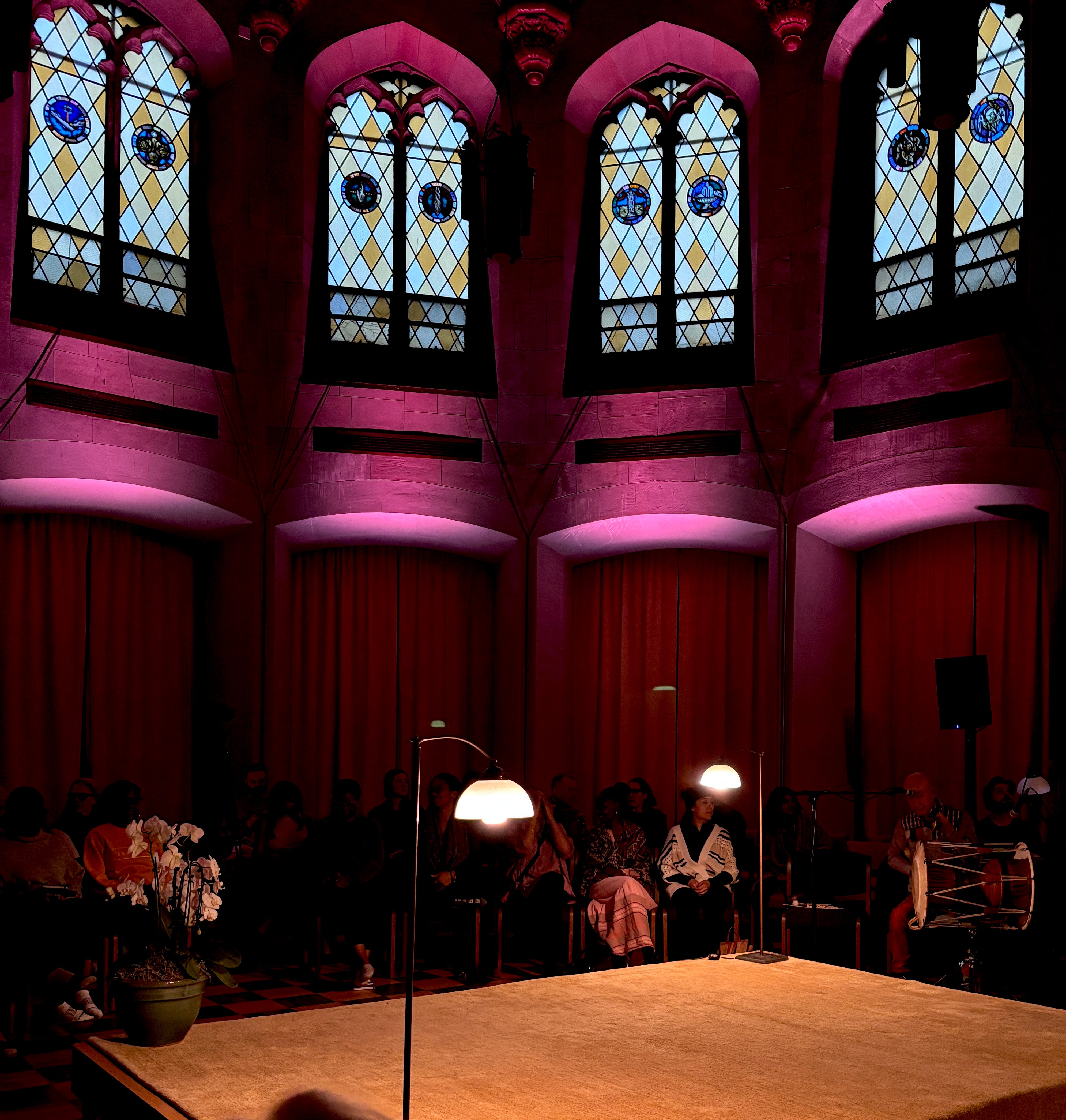
I left the retreat, which named dark demons to emerge from our state of mourning, energized to create more inperson experiences that named the things we wish to see more of.
I was still in that haze this week when I, as a partner and head of brand communications at M13, hosted a new media gathering for early-stage founders with Axios Communicators’ Eleanor Hawkins and Tanya Gillogley, who works with me to help early-stage founders build their narrative and reach audiences.
With dwindling trust in institutions, where is that trust going?
It’s going to the news leaders at our gathering, people who make and curate the news – independently.
We’re in the long tail of news, and talented journalists are leaving legacy media to become independent news creators. Polina Pompliano, Zack Guzman, Eric Newcomer and Alex Konrad once covered tech founders for Fortune, Yahoo! Finance, Bloomberg and Forbes — and are now founders themselves. They are not only making the news but also distributing and selling the news.
Balancing observable metrics (too many, noisy) with understanding what really matters is crucial because in this long tail environment, what’s essential is getting not the most views but the right views. Substance > growth hacks.
We wanted to hear from them and learn how to work with them. It wasn’t hard for me, Eleanor and Tanya to come up with our speaker wish list; there were too many to fit in the modern attention span and duration we permit ourselves to be around other people. Polina, Zack, Alex, and Eric kindly made time for us and so did Prof G Markets cohost and writer Ed Elson. Representing the platforms were Substack’s Helen Tobin and LinkedIn’s Tanya Dua.
When reflecting on the speakers (the caliber!) who had convened in our office, I find it remarkable and gratifying that our speakers — media influencers — were so friendly and accessible to our founders. Our founders likely don’t understand that this would not have been possible ten years ago, even five years ago.
Two more points before reflecting on Ed’s insights.
The boundary between creator, platform and audience has never been more porous.
We’re all in this experiment together. Our founders found themselves sitting next to longtime media decision makers who originated the digital media playbook. People like Business Insider founder Henry Blodget and Kevin Delaney, who left WSJ to start Quartz and now Charter. Plus investors turned media influencers like Anthony Pompliano and Capital Allocators host Ted Seides, the expanded Newcomer team and many others who are shaing trends in how ideas are discovered, funded, and shared.
Secondly, the gathering was designed for optimal connection.
We began with a reception and then ten minute 1:1s with speakers, and then resumed the reception so that our founders could be with our awesome guests and speakers. In a time when our discourse is mediated, monetized, and optimized by someone else into a ‘feed’ which we willingly bow our heads to suck in and scroll through, a good story told in person is one of the most satisfying ways to build real connection.
Are you still with me after all this table setting? Thank you for staying.
I’ll write about the other speakers in future posts.
I’m starting with Ed because his sincerity was shocking, even disarming.
For the many listeners of the Webby winning Prof G Markets podcast, Ed is the cohost who keeps it clean and keeps us moving forward.
At 26, he’s the grown-up in the room.
Along with cohosting the Prof G Markets and First Time Founders podcasts, Ed also writes, flipping the assumption of GenZ creator as video-first.
In our conversation, Ed described a flywheel of creativity where his writing sharpens his voice. His podcasts tell you what is happening; his writing helps you understand what it means. Real time to reflective.
Ed is refreshingly resistant to metrics and what’s trending. He goes where his curiosity takes him.
By being consistently thoughtful and demanding more from us than today’s cynicism and zero-sum default, Ed is doing something that’s genuinely hard.
He’s building a resonant and independent voice inside and outside of a larger brand, a voice that’s at once confident and questioning, relatable and forward-looking. It’s a voice that’s earning trust by cultivating substance and inviting us to think more deeply and aim higher, as if meaningful change is possible.
And that’s what will keep Ed ahead of the curve.
Let’s unpack how he does that.
On editorial decisions and metrics.
“I focus on what interests me. That’s kind of underrated in media, where the demand to get clicks and grow your audience can become a little distracting. It's honestly about trying to understand, Okay, why does this bring up emotion or interest me? I trust that it’ll do the same for someone else.”
Instead of reverse-engineering content from analytics, Ed trusts that personal resonance can lead to audience resonance.
If you think that’s easier said than done, especially with a platform like Vox, Ed’s unflinching defiance reminds me of Casey Neistat at the start of his YT career when he focused on storytelling about what was right in front of him. Casey is not optimizing thumbnails for clicks; he’s optimizing for authenticity and creative expression. The result is enduring loyalty.
On the competitive landscape (manosphere, fin-fluencers etc).
“I know we’re technically competing with manosphere and TikTok influencers, but I am not that worried and can’t get distracted from connecting with our audience thoughtfully. I don't think people are engaging with that kind of content in a way that makes me anxious or jealous.”
Ed isn’t reactive; he’s intentional. He acknowledges the manosphere/influencer landscape and refuses to play on its terms.
Being serious without being self-serious is his response.
On isolation and the creator.
“I think it's easy in the media ecosystem to turn inward and create a bubble where you're so focused on your audience and work that you feel like you are socializing among your audience. But you're barely doing that. Talk about devices and polarization.”
Ed appreciated our gathering, remarking on the energizing exchange of ideas, and made a meta-observation about the social illusion of the parasocial relationships from within the creator economy.
It made me think of Doug Rushkoff who would say: stare at “social media” until you realize just how very weird it is.
On the loneliest generation.
“I'm certainly very focused on the issues of my generation and the amount of time that we're spending online and what that's doing to our mental health and our friendships. We're the loneliest generation in history. I think it informs a lot of my work, and it informs a lot of what's happening in business and politics too.”
We know that the Prof G Market audience is business leaders and decision makers but when I asked him to talk about audience, his answer surprised me.
Ed showed genuine care as he described his audience, his community, as generally young men, sometimes struggling, sometimes striving; and concerned parents especially mothers, who tune in for generational insights.
On how Ed might look back on himself.
“My 60-year-old self would commend me for taking myself seriously. That’s something underrated, especially in my generation, where we have this obsession with being quite cynical. It's really important that we are willing to engage with issues in a serious way and not get cringed up by the idea of caring about something.”
I couldn’t resist asking Ed what his 60 year old self would thank him for doing and what he’d encourage him to do more of. Ed’s closing reflection about taking himself seriously, not in an arrogant way, cuts through generational cynicism.
A few months ago, Ed said on his podcast that he was 16 when Trump announced his candidacy. So he has spent his adult life thinking about someone he doesn’t want to think about. I think often about his realization and that math. There is so much more in life that’s deserving of our attention. To understand that so early is a gift — to us, his community.
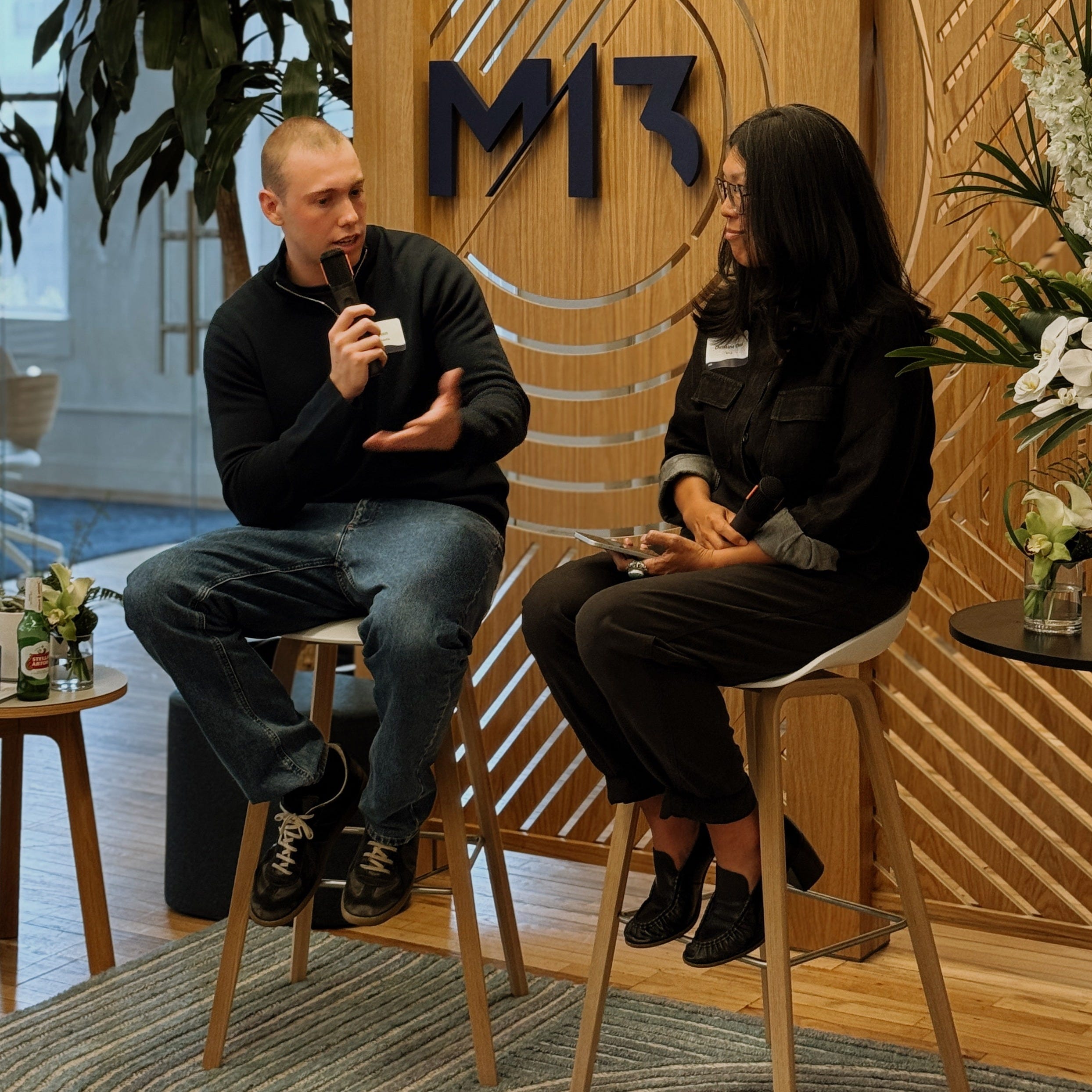
Ed’s parting comment about taking himself serious is profound and generational. It’s the kind of insight that carries me as I put myself out there with this post, my very first. Thank you Natalie Kuhn, Katie Baynes and Helen Tobin for the encouragement; you deserve to know how much it means.
Let me know what you think, and hope to see you next time.